What GEO is, and why it matters more than ever
AI search engines no longer return ten links: they give one answer with two or three names. Here is what GEO is and how to be in that answer.
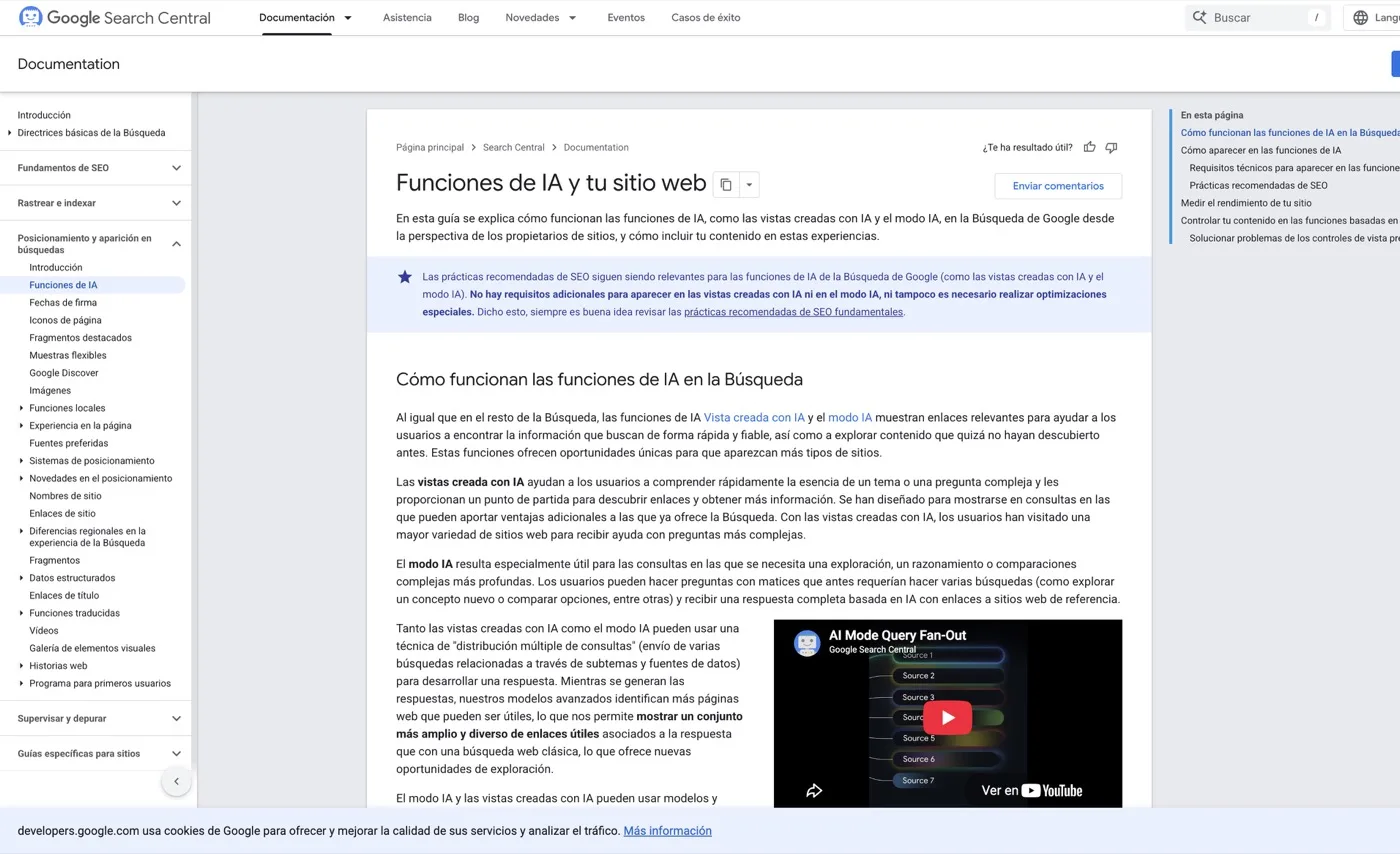
Until recently, searching the internet meant typing two words and getting a list of blue links. Today more and more people type a whole question into ChatGPT, Gemini, Perplexity or the automatic summary Google puts at the very top, and get a written answer with two or three recommendations. The change looks small. For a business, it is not: if your name is not in that answer, as far as that person is concerned you do not exist.
The work of being in those answers has a name: GEO, short for Generative Engine Optimization. A generative engine is any artificial intelligence system that does not hand you a list of pages, but writes an answer based on what it has read.
What GEO actually is
GEO is the set of decisions taken about a website, and about a business’s digital presence, so that artificial intelligence systems understand it, cite it and recommend it when someone asks about what that business offers.
It is not a trick, and it is not a keyword repeated many times. It is groundwork on three things: what you say, how what you say is organised, and to what extent what you say can be verified elsewhere. A generative engine does not reward whoever shouts loudest: it cites whoever is easiest to read and safest to quote.
Why this changes the rules
The underlying difference lies in how people search and how the engine answers.
People ask in natural language. It used to be “plumber Madrid”. Now it is “who do I call if I have a water leak in Madrid on a Sunday?”. These are longer, more specific searches carrying more context, and the answer is no longer built by crossing two words, but by understanding a situation.
There is one answer, not ten. In a list of results, being sixth still brought you visits. In a generated answer there is room for two or three names. There is no second page to scroll to: either you are in it or you do not appear.
The user no longer compares — they delegate. When someone receives a written recommendation, in most cases they do not open seven tabs to verify it. They ask the same assistant their next question, or call the name they were given. The filtering was done by the machine before the person started deciding.
This does not mean traditional search optimisation is dead. It means there are now two shop windows to look after at the same time. We go into detail in GEO and SEO: where they overlap and where they don’t.
What makes a generative engine cite a company
AI systems do not publish a manual of their rules, and anyone telling you otherwise is selling smoke. What can be observed clearly is the kind of content that ends up being cited again and again. These are the traits that keep repeating.
Content that answers specific questions
A page saying “we are leaders in comprehensive solutions” gives an engine nothing to quote. A page explaining “how long a screen repair takes and what happens to the data on the phone” does. The closer your content is to a useful answer to a real customer question, the easier it is for an engine to reuse it.
Clear structure
Engines read the web in parts, not straight through. Headings that say what comes underneath, short paragraphs, one idea per paragraph, lists when there are steps or requirements. A well-structured site is not only more comfortable for people: it is easier for a machine to slice up and quote.
Answers that stand on their own
This is the point most often overlooked. A paragraph starting “for that very reason, and as we said earlier…” cannot be quoted out of context. One that starts by saying what it is about can. Write each block assuming someone might read only that block.
Verifiable, consistent facts
Opening hours, service area, services, how to get in touch, terms. Make sure they are written down, that they are specific and, above all, that they say the same thing on your website, on your Google profile and on your social media. Inconsistency between sources is one of the things that most undermines trust in a system whose job is to compare.
Presence in sources the engine considers reliable
A generative engine does not stop at your website. It cross-checks what it finds with your Google Business profile, with your customers’ reviews, with industry directories and with mentions in media or local sites. A business only its own website talks about is a business that is hard to recommend.
Structured data markup
This is the most technical part and it fits in one sentence: structured data are invisible tags in the site’s code that tell the machine “this is an opening time”, “this is a price”, “this is a frequently asked question”. They change nothing for the visitor, but they save the engine the work of guessing.
What a small business can do, in concrete steps
You do not need a marketing department. You need order and consistency.
-
Make a list of the questions your customers ask you. The real ones, the ones that arrive by phone and by WhatsApp. That list is the best content plan you will ever have.
-
Answer each one on your website, under its own heading. No sales detours. The answer first; the pitch afterwards.
-
Write down what you take for granted. Where you are, which area you travel to, what each service includes, what you do not do. What is not written down does not exist as far as a machine is concerned.
-
Bring your Google Business profile up to date. Correct categories, real opening hours, current photos and the same details as on your website. It is one of the sources that weighs most in local recommendations.
-
Ask for reviews and reply to all of them. Reviews are third-party opinion, and they are one of the few things an engine can use to check what you say about yourself.
-
Look after the technical side of the site. Fast loading, good on mobile, and structured data in place. This is the job of whoever runs your website, but it helps to know how to ask for it by name.
-
Review it every few months. An out-of-date opening time or a service you no longer offer does more damage than having nothing, because it introduces contradictions.
Where to start
GEO is not a switch you flip: it is a way of handling your digital presence knowing that you now have human readers and automated readers, and that both want the same thing — clarity, specificity and consistency. The good news for a small business is that this clarity is within reach, because it knows its customers and it knows what they ask.
If you want to know where you stand today, the first step is to look at it with the data in front of you: what an AI search says about your business, what shows up on your Google profile, and what gaps your website has.
That is exactly what we do in the free audit: a no-obligation review, with written conclusions and an order of priorities. Whether you work with us afterwards or not.