How to get Google reviews without being a nuisance
Asking for reviews feels awkward, so almost nobody asks. When to ask, how to word it, and which practices can cost you your Google profile.
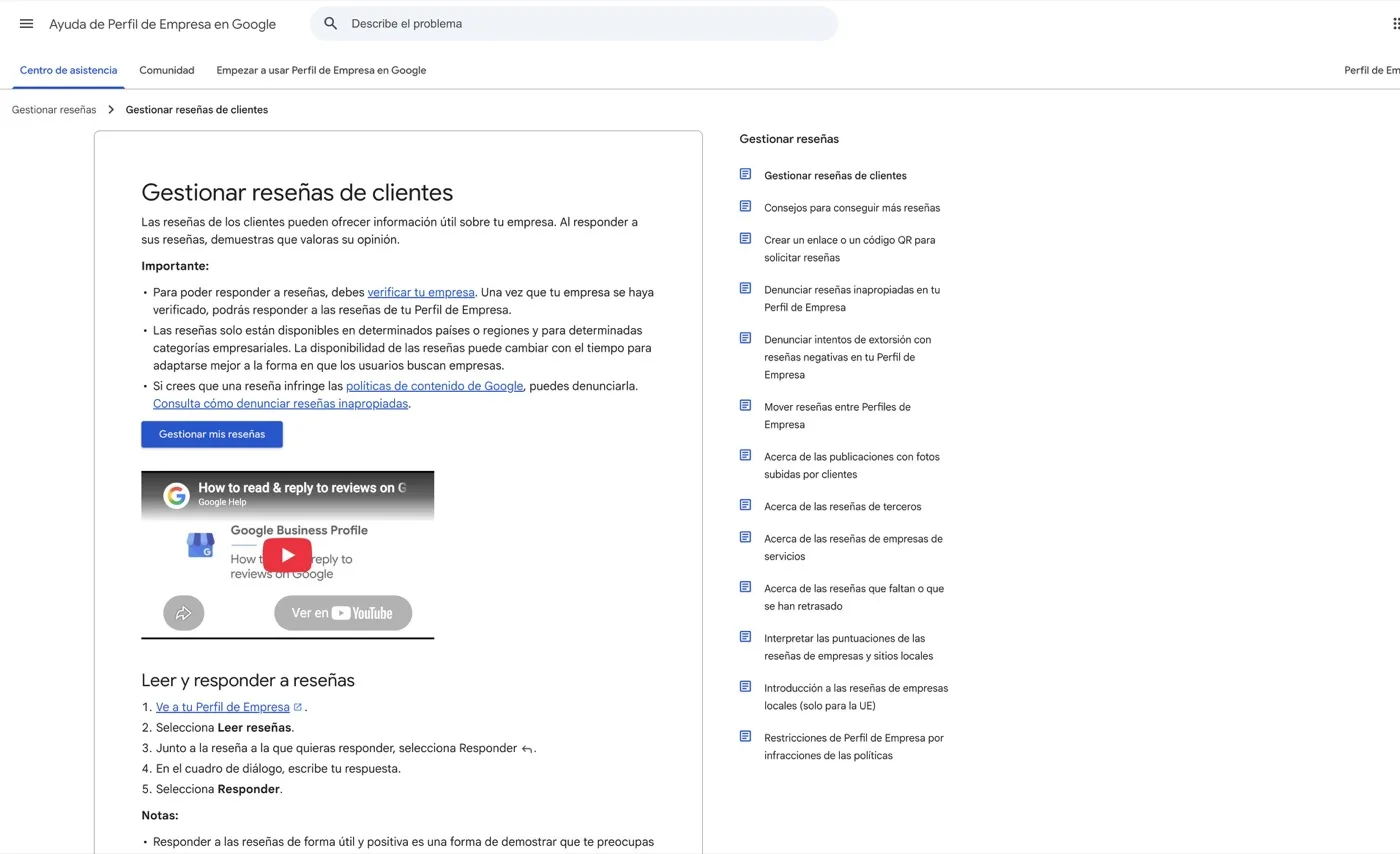
Almost every business we work with has the same problem with reviews: they know they are short of them, they know they should ask, and they do not ask. Almost always for a reasonable motive: it feels awkward to be the pest chasing their own customers.
The good news is that most happy people will leave the review if you ask properly and at the right moment. The problem is not asking: it is asking late and without making it easy.
Why reviews move so much
Reviews influence two things at once: where your business sits on Google’s map, and the decision of the customer who has already found you. That is why they are one of the few efforts that pays off twice.
On Google’s side. Reviews are one of the signals Google takes into account when deciding which businesses to show in the local pack, the block of three results with a map at the very top. It does not publish how much they weigh or how many you need — anyone giving you a number is inventing it — but the whole picture counts: not just the average rating, also how many there are, whether they keep arriving, and whether the business replies. We look at it alongside the other signals in how to appear on Google’s map.
On the customer’s side. The stars and the first two comments are the first thing read by someone choosing between you and the business around the corner, often before they open your website: they replace word of mouth when there is nobody around to recommend you. And they are one of the few things a search engine or an AI system can use to cross-check what you say about yourself.
The exact moment to ask
The moment matters more than the wording. Asking three days later by email works far worse than asking with a satisfied customer in front of you.
The rule: ask right when the customer says they are happy. That moment exists and you recognise it when it happens: the “this looks great”, the “so glad I found you”. That is it.
In practice:
- Hairdresser, beauty salon, shop: as you finish, while taking payment, as the person looks at the result.
- Restaurant: when bringing the bill, if the food went well and the service felt personal.
- Clinic or practice: at the end of the visit where the patient notices the improvement, never at diagnosis.
- Home services and long projects: when showing the finished work, on site and before packing up.
And one moment to avoid always: do not ask for a review in the same conversation where you resolve a complaint, even if it ends well. It sounds like collecting a debt.
How to ask: lines you can copy
The formula that works has three parts: you thank them, you explain what it is for, and you leave it in their hands. None of the “it would help us so much, please”: the more pleading it sounds, the more uncomfortable it gets.
In person, as you finish:
“I’m glad you like it. If you feel like it, would you leave us a Google review? For a small business it’s how new people find us. Here’s the QR code, it takes two minutes.”
On WhatsApp, after finished work:
“Hi [name], thank you for trusting us. If you were happy with it, would you mind leaving us a Google review? It helps people around here get to know us: [link]. And if anything didn’t go as expected, tell me and we’ll put it right.”
Notice the end of the WhatsApp example: offering a private channel to complain is not review filtering, because you give both options instead of closing one off. That is where the line sits, and we explain it below.
And one common-sense rule: you ask once.
How to make it easy
Most of the reviews that never arrive are not missing because the customer did not want to: it is because you asked them to search for your business on Google, scroll to the reviews section and find the button. Every step loses people.
The direct link. Google gives you a short link that opens your profile straight at the review box; it is in your Google Business dashboard. Keep it somewhere you can copy it in two seconds: WhatsApp quick replies, email signature, and the business phone.
The QR code. That same link printed where the customer waits: counter, bill, waiting room, invoice. With a line next to it (“How did we do? Tell us on Google”), not a black square with no explanation.
The follow-up message. If you already talk to customers on WhatsApp or by email to confirm appointments or deliveries, that is the natural channel. And if more people than you serve customers, let whoever is in front of the customer ask, using the agreed line.
What NEVER to do
What is at stake here is losing the profile. Google’s review content policies are explicit, and breaking them can bring anything from removal of the affected reviews to suspension of your profile.
Do not buy reviews. Not packages, not profiles, not services promising opinions. They are fake, they are prohibited, and Google puts resources into detecting them. The day they fall, they all fall together.
Do not incentivise them. No “leave a review and get a discount”, no free coffee, no prize draw. Offering anything in exchange breaks Google’s rules, even if the review is sincere and the customer is delighted. It is widespread among businesses that do not know it is forbidden, and that does not make it any less punishable.
Do not filter who you ask based on how happy they are. It has a name in the industry, review gating: asking first how it went and sending only the positive ones to Google, diverting unhappy customers to an internal form. It breaks the rules. The correct approach is to ask everyone equally and additionally offer a direct channel to anyone with a complaint: opening both doors is fine; closing one is not.
Do not write them yourself, nor your family, nor your team. They are prohibited and easy to spot: several arrive within days, from the same area and in the same style.
Do not ask for reviews from people who have not been customers, and do not do “I’ll leave you one and you leave me one” swaps.
Do not put a tablet on the counter for people to leave them there. Several reviews in a row from the same connection and the same device is exactly the pattern that trips the automated filters.
The honest version: getting legitimate reviews is slower, and there is no shortcut without a real risk behind it. A steady trickle of genuine reviews holds up; thirty bought in a week is a problem waiting to happen.
How to reply to a bad review
You are going to get one, and a profile with no complaints at all reads as less credible than one with a bad review handled well.
Before writing, understand this: you are not replying to the person who complained, but to everyone who will read that review and your reply before deciding whether to come.
Four rules:
- Wait until the anger passes. A reply written hot stays there forever.
- Do not contradict their account point by point, even when you are right. Readers cannot arbitrate, and whoever defends themselves hardest comes off worst.
- Do not give details about the customer or the case. No times, no names, no “you came three times”.
- Move the conversation elsewhere: a phone number or an email, and resolve it privately.
Example:
“Good morning, Marta. We’re sorry the wait was so long; that’s not the experience we want to give. We had an unexpected problem with the team that day, which is no excuse for not warning you in time. We’ve since changed how we handle appointments when we’re running late. Write to us at [email] and we’ll go through it properly. Thank you for telling us.”
What it does well: it acknowledges the fact without arguing, explains without hiding behind the explanation, says what has changed, offers a private way out, and thanks them. And it is short.
If the review is fake or from someone who was never a customer, you can report it from the profile. It is not always removed; in the meantime reply anyway, in two lines: whoever reads it will be able to judge.
And one thing people forget: reply to the good ones too.
Where to start
If you have few reviews today, do not start with a campaign. Get the direct link from your profile, print the QR code, agree the wording and the moment with your team, and ask everyone who leaves happy for two weeks.
How long it takes to show depends on your volume of customers, your sector and the state of the rest of your profile. Anyone giving you a fixed timeline is making it up.
If you want to know where your local presence stands today — your profile, your reviews and what customers see before calling you — we look at it in the free audit: no obligation, written conclusions and an order of priorities. Whether you work with us afterwards or not.